



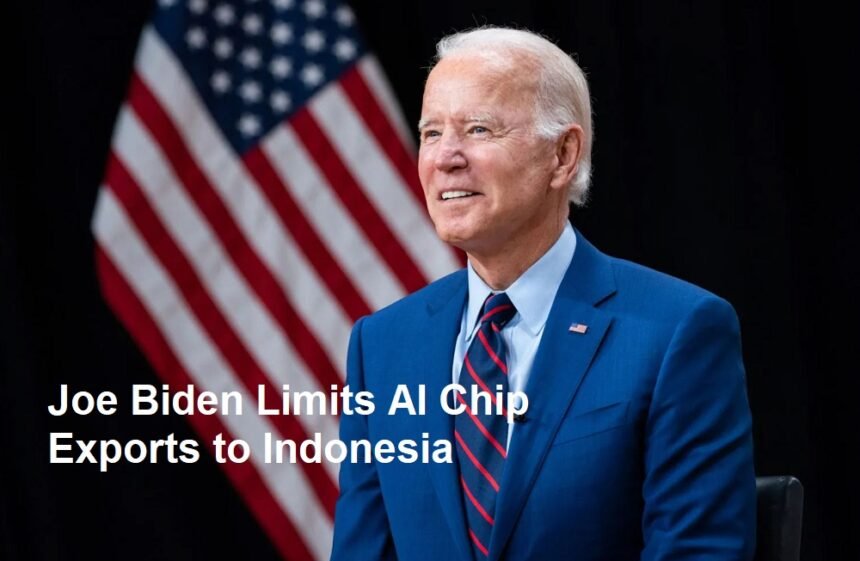
In a recent move, the United States has imposed restrictions on the export of advanced artificial intelligence (AI) chips to Indonesia. This decision, which reflects growing concerns over the global race for AI supremacy and national security, has sparked significant attention across industries and governments worldwide. Here’s what we know about the situation and its potential implications.
- The Nature of the Restriction
The new export controls, announced by the U.S. Department of Commerce, specifically target high-performance semiconductor chips that are essential for AI applications. These chips, often referred to as “AI processors,” are integral to developing powerful machine learning models, data analysis, and AI-driven technologies. The restriction aims to limit the flow of cutting-edge AI technology to certain countries, including Indonesia, due to concerns about the potential for misuse and national security risks.
- Reasons Behind the Export Limits
The Biden administration’s decision to impose these export limits is rooted in a broader strategy to protect U.S. technological dominance and prevent sensitive AI technologies from being used by countries that could pose a threat to American interests. The U.S. has already implemented similar restrictions on several countries, including China, due to fears that advanced AI chips could be used for military or surveillance purposes.
In Indonesia’s case, the restriction appears to be driven by concerns over the country’s rapidly growing AI sector and its potential to leverage advanced technology in ways that could undermine U.S. national security interests.
- Impact on Indonesia’s Tech Industry
For Indonesia, which has been making significant strides in the development of its tech and AI sectors, this export ban is a setback. The country has been working to enhance its digital economy and position itself as a key player in Southeast Asia’s growing tech landscape. The restricted access to advanced AI chips could slow down the development of AI applications across various industries, including healthcare, transportation, and financial services, which rely heavily on powerful AI-driven solutions.
While Indonesia has other sources for semiconductor chips, these restrictions specifically target the most advanced and cutting-edge technology, which is crucial for the next generation of AI systems. This could potentially delay innovation and reduce the country’s competitiveness in global AI markets.
- Global Semiconductor and AI Race
The U.S. government’s decision is part of a larger, global competition for technological supremacy in the semiconductor and AI industries. As AI capabilities continue to evolve, the demand for high-performance chips, such as those developed by U.S. companies like Nvidia, Intel, and AMD, has surged. These chips are crucial for powering AI applications, from data centers to autonomous systems, and are seen as a critical asset in shaping the future of global technology.
China has been one of the primary targets of U.S. export controls, with similar restrictions placed on Chinese tech giants such as Huawei. The U.S. is now expanding its focus to other countries, such as Indonesia, that could be seen as emerging competitors or strategic allies in the tech race.
- Diplomatic Reactions
The export restrictions have already led to some diplomatic tension between the U.S. and Indonesia. Indonesian officials have expressed concerns that the move could hinder their technological development and potentially strain bilateral relations. However, Indonesia has also reiterated its commitment to advancing its own semiconductor production capabilities and has started exploring alternative sources for the needed chips.
While the U.S. has emphasized that the restrictions are necessary for national security, Indonesia’s government may seek to negotiate with American authorities to ease the restrictions or find a middle ground that would allow access to the required technology without compromising security concerns.
- Broader Implications for Global Trade
This move by the U.S. could have broader ramifications for international trade and the global technology market. Other countries may follow suit and implement similar export restrictions, further fragmenting the global supply chain for high-tech goods. This could potentially disrupt global business operations, particularly for companies and countries that rely on access to the most advanced AI technology.
On the other hand, the decision may spur other nations, including Indonesia, to accelerate efforts to develop their own domestic AI capabilities and reduce reliance on foreign technology. In the long term, this could lead to a diversification of the global AI ecosystem, with more countries seeking to establish themselves as leaders in AI development.
- Looking Ahead
As the global race for AI dominance intensifies, the geopolitical landscape will continue to evolve. The U.S. will likely maintain its focus on protecting its technological edge, while countries like Indonesia may look for ways to navigate these restrictions. With the potential for future negotiations, partnerships, and technological advancements, the outcome of these export limits will shape the future of both AI and international relations.
For now, the restriction on AI chip exports to Indonesia represents a significant moment in the ongoing technological and diplomatic dynamics between the U.S. and the rest of the world.
This article explains the reasons behind the U.S. limiting AI chip exports to Indonesia and the potential impacts on both countries. It provides a clear picture of the international tech race and the implications for global trade and innovation.